When my husband Thomas died, the silence in our small house outside Manchester became unbearable. For forty years we had built that home together. Every wall carried a memory.
A few months after the funeral, my son Daniel suggested that he, his wife Emma, and their three children move in.
“You shouldn’t be alone, Mom,” he said. “We’ll take care of each other.”
I believed him.
At first it felt wonderful. The house was full of laughter again. But slowly everything changed.
The kitchen was always a mess. Toys covered every room. My requests were ignored.
One afternoon I asked Emma to help clean up.
“They’re just kids,” she replied without even looking at me.
The worst part was Daniel.
When I complained about the noise, he snapped:
“This isn’t just your house anymore.”
Those words stayed with me.
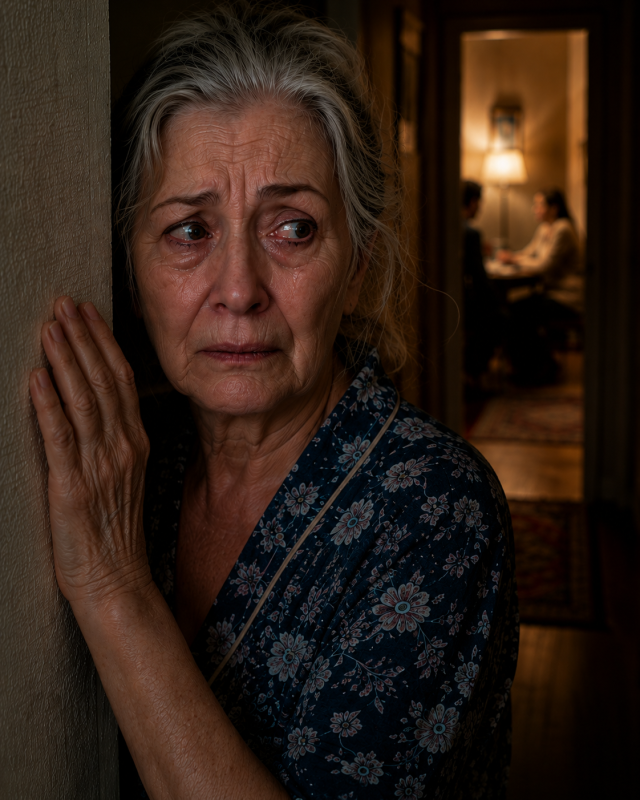
A week later I overheard him talking on the phone.
“Once the paperwork is sorted, we’ll sell the place. The old woman won’t be able to stop us.”
My blood ran cold.
That night I couldn’t sleep. Something felt terribly wrong.
I went into Thomas’s old study, a room I rarely entered. While searching through a cabinet, I found a sealed envelope with my name.
Inside was a letter.
If you’re reading this, my love, something is troubling you.
There was also a folder of documents. Months before his death, Thomas had discovered that Daniel had tried to pressure him into transferring ownership of the house.
My husband had refused.
The documents proved everything.
The next morning I called a lawyer.
Two days later I gathered everyone in the living room.
“You have twenty-four hours to leave.”
The room exploded.
“Are you serious?” Daniel shouted.
“Yes.”
“You’re throwing your own grandchildren out?”
“No. I’m removing people who planned to take my home.”
I placed the documents on the table.
The color drained from Daniel’s face.
Twenty-four hours later they were gone.
The family called me cruel. Heartless.
But none of them knew the truth.
Months passed.
Then one rainy afternoon someone knocked at my door.
It was Daniel.
Alone.
Older. Broken.
“I was wrong,” he whispered. “Dad was right. I cared more about the house than about you.”
For the first time in years, I saw my son instead of a man chasing an inheritance.
I didn’t invite him inside immediately.
Trust doesn’t return in a day.
But eventually we talked.
Then we talked again.
And again.
Today my house is still mine.
The photographs are still on the walls.
Thomas’s chair still stands by the window.
And when I sit there in the evening, I no longer feel guilty.
Because protecting yourself is not cruelty.
Sometimes the hardest act of love is refusing to let the people you love destroy you.