
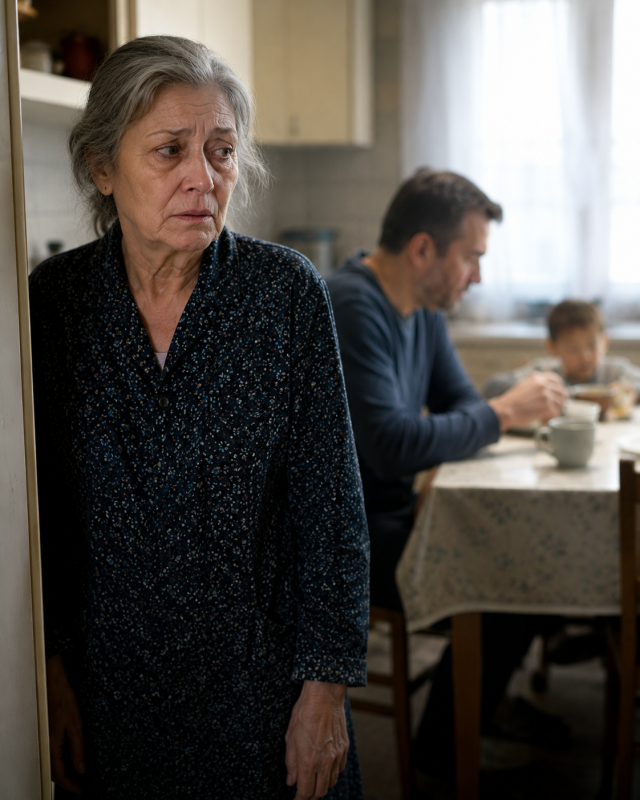
I spent eleven years cleaning other people’s homes while slowly losing my own family.
When my husband left me for another woman, I thought the worst thing had already happened. We had been married for almost twenty years. We raised two children together, built a modest life, made plans for retirement, and dreamed about the day we could finally stop worrying about money.
Then one afternoon everything collapsed.
He packed a suitcase, walked out the door, and never came back.
The months that followed were some of the hardest of my life. Every bill felt heavier. Every decision felt impossible. My son was already living independently, but my daughter Sarah was just starting her own family. She had a young child, a mortgage, and endless expenses.
I knew she needed help.
That was when I made the decision that changed my life.
I left England and accepted a job in Germany as a caregiver for elderly people.
The work was exhausting.
I woke up before sunrise, worked twelve-hour shifts, learned a foreign language from scratch, and spent holidays alone in a small rented room. While other people enjoyed weekends, I cleaned, cooked, lifted patients, and worked overtime whenever it was offered.
Every month I sent money home.
Sarah always sounded grateful.
“Mom, I don’t know what we’d do without you.”
“The baby needs new clothes.”
“The washing machine broke.”
“We’ll pay you back one day.”
I never asked questions.
I trusted my daughter.
Years passed.
I missed birthdays, school plays, Christmas dinners, and countless family moments. Every sacrifice felt worthwhile because I believed I was helping them build a stable future.
Eventually I saved enough money to take an extended trip home.
I imagined family dinners, hugs from my grandson, long conversations with Sarah, and finally seeing the life I had helped support for so many years.
Instead, I discovered a truth that nearly broke my heart.
The first thing that seemed strange was my son-in-law, Mark.
It was Tuesday morning.
At nine o’clock he was sitting on the couch watching television.
At noon he was still there.
The next day he was there again.
And the day after that.
At first I assumed he was on vacation.
Then I thought perhaps he was recovering from an injury.
But as the week went on, I noticed something disturbing.
He never left for work.
Not once.
When I casually asked Sarah where Mark worked these days, she looked away.
“Things are complicated,” she said quickly.
Then she changed the subject.
That answer stayed with me.
A few days later my grandson accidentally revealed the truth.
“Grandma, Dad’s always home,” he said while eating breakfast. “He’s been home since I started school.”
I nearly dropped my coffee cup.
“How long ago was that?”
“Five years.”
Five years.
Five entire years.
That evening I confronted my daughter.
“Tell me the truth.”
Sarah burst into tears.
Mark had lost his job five years earlier.
At first they thought it would be temporary.
Months became years.
He stopped looking seriously for work.
Then he stopped trying altogether.
The money I sent every month became their primary source of income.
I felt physically sick.
“You let me work myself to exhaustion while he sat at home?”
Sarah cried harder.
“We didn’t know how to tell you.”
“No,” I replied quietly. “You didn’t want to tell me.”
The next morning I spoke directly with Mark.
For the first time in years, someone challenged him.
“Why haven’t you worked?”
“Jobs are hard to find.”
“Five years?”
He said nothing.
“Do you know how many nights I cried myself to sleep in a foreign country?”
Silence.
“Do you know how many birthdays I missed?”
His eyes dropped to the floor.
That was the moment I realized something important.
The greatest betrayal wasn’t the money.
It was the lie.
For years they allowed me to believe I was helping them through a temporary crisis.
Instead, they had built their entire life around my sacrifice.
That evening I made a decision.
“No more money.”
Sarah stared at me.
“What?”
“I love you. I love my grandson. But this ends today.”
The following weeks were ugly.
Arguments.
Tears.
Accusations.
Mark even claimed I was abandoning the family.
I laughed bitterly.
“Abandoning the family? I spent eleven years carrying it.”
For the first time in a decade, I chose myself.
I returned to Germany, but everything changed.
I stopped taking extra shifts.
I started traveling on weekends.
I bought clothes without guilt.
I visited museums, parks, and small towns I had never had time to see.
Most importantly, I stopped living only for other people.
The first months were difficult for Sarah and Mark.
Without my money, reality finally arrived.
Mark took temporary work.
Then permanent work.
Then better work.
Something remarkable happened.
The man who had spent years sitting on a couch slowly became responsible again.
A year later Sarah called me.
Not to ask for money.
Just to talk.
“Mom,” she said quietly, “I was angry at you.”
“I know.”
“But now I understand.”
I closed my eyes.
“You do?”
“Yes. We should never have put that burden on you.”
For a moment neither of us spoke.
Then she added something that made me cry.
“You gave us everything. We should have wanted you to live too.”
Today my relationship with my daughter is stronger than it has been in years.
Mark works.
Their bills are their responsibility.
My grandson knows his grandmother not as a bank account, but as a person.
Sometimes love means helping.
Sometimes love means saying no.
And sometimes the most difficult lesson a parent can teach is that sacrifice should never become someone else’s permanent lifestyle.
The day I stopped saving my daughter’s family was the day I finally started saving myself.